


Congratulations!
You have taken your first step to "Master the Investment Trends" through our Wave and Wind Investment Strategy. We encourage you to venture on ....
Wave and Wind
Master the Investment Trends
(Only Available through Towne and wealth Management)
 We use, what we believe, is the only investment portfolio management strategy that strives to manage risk, while at the same time, enhancing performance. Our strategy utilizes arguably the two most important investment concepts of our time, Asset Allocation and Relative Strength. We, at Towne Wealth Management call our innovative strategy, “Wave and Wind”, utilizing the ebb and flow of investment markets in the new global economy. It is specifically designed to give investors the power to manage the volatility in their portfolios, while maximizing their portfolio performance.
By utilizing Asset Allocation Modeling, developed in 1952 by Harry Markowitz, our innovative ”Wave and Wind” strategy is designed to provide an effective way to pursue competitive rates of return, while channeling a portfolio into volatility ranges. Secondly, by implementing Relative Strength measurements in a portfolio using the renowned Dorsey Wright system, a portfolio can be leaned in or out of the market, with the goal to reduce risk and to maximize results.
"Global Capitalistic Expansion..."
 Today, Americans are witnessing the expanding global capitalistic revolution, birthed in 1776 by our Founding Fathers. The fall of totalitarian regimes and socialism in countries like Brazil, Russia, India and China, has resulted in an amazing change throughout the world. The inseparable relationship between personal liberty and personal responsibility was expressed by our Founding Fathers in two great documents, "The Declaration of Independence" by Thomas Jefferson, and The Wealth of Nations by Adam Smith. These two documents are the catalyst of what we are seeing today... the quest for worldwide personal freedom, during global capitalistic expansion.
Whatever your financial destination is, you will need adequate capital. Christopher Columbus’ desired destination was no different. He longed for a new world ... a global expansion.
The Wisdom of Columbus
Once Columbus discovered a possible new sailing route, he obtained the capital needed to fund his expedition. As he began plotting his course, Columbus soon realized that the old trade routes were inadequate. Something more was needed. The old sailors of the day told him that when sailing past the Azores Islands, contrary easterly winds would impede further progress. It was rumored that one might be able to pick up westerly trade winds and ocean currents if one sailed south, toward the Canary Islands.
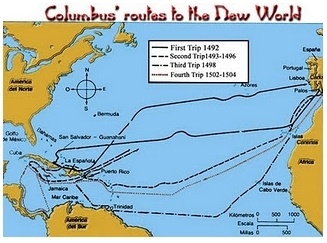 This is exactly what Columbus did. He combined Old World sailing techniques with New World strategies. Instead of sailing directly across the Atlantic Ocean, Columbus first sailed south, towards the equator, picked up the westerly trade winds, and then headed northwest to the West Indies. We believe that combining time-tested investment strategies with 21st Century investment techniques, will keep you on course to help arrive soundly at your investment destination.
No strategy or asset allocation ensures a profit or protects against a loss.
Helpful Content
Qualifying For Medicare Under Age 65
You might qualify for Medicare if you’re under 65-years-old. This article will explain the conditions where you may qualify for Medicare early.
Choose Your Own Retirement Adventure
Retirement is one of the greatest adventures you’ll have. Which retirement adventure will you choose?
Insurance Needs Assessment: For Empty Nesters and Retirees
Do your insurance needs stay the same when the nest empties?
What If Your Kids Decide Against College?
Rising college costs prompt students to seek alternatives; 529 account funds can be used for other education options.
A Brief History of Estate Taxes
Federal estate taxes have long since been a lucrative source of funding for the federal government.
Protecting Your Business from the Loss of a Key Person
Business owners may be able to protect themselves from the financial consequences of losing a key employee.
First Year of Retirement: What to Expect
Understand the key financial and lifestyle shifts that happen in your first year of retirement.
Tax Rules When Selling Your Home
The tax rules governing profits you realize from the sale of your home have changed in recent years.
Steps to Protecting a Child with Disabilities
Planning for children with special needs can be confusing but by working together, we can help navigate those challenges.
View all articles 
Assess Your Life Insurance Needs
Estimate how much life insurance coverage may be appropriate for your situation.
Federal Capital Gains Tax Estimator
Estimate your potential federal capital gains tax liability on the sale of an asset.
Estimate Your RMD
Calculate your required minimum distribution amount based on your account balance and age.
Comparing Investments
Compare two different scenarios side by side to see how they stack up over time.
How Compound Interest Works
Explore how compound interest can grow your money over time with this interactive tool.
Inflation & Retirement
See how inflation over time could affect the purchasing power of your retirement income.
View all calculators
Rightsizing for Retirement
What does your home really cost?
Timing Your Retirement
This short video illustrates the importance of understanding sequence of returns risk.
Once Upon a Goal
Do you know how to set up your financial goals for success? This knight does.
The Cycle of Investing
Understanding the cycle of investing may help you avoid easy pitfalls.
Retirement Accounts When You Change Your Job
This video explores what to do with retirement accounts when you move on from your job.
Preparation is the Key to Retirement
The simplest ideas can sometimes make a massive difference over time. Enjoy this brief video to learn more.